Is Halloween Pagan? and Should Christians Celebrate It.
Every October, the same debate resurfaces in Christian circles with renewed intensity: Is Halloween rooted in paganism? Did it originate from dark spiritual practices? Should believers avoid it entirely, or is it harmless cultural fun? Some Christians confidently reject Halloween as spiritually dangerous, while others see it as an opportunity for community engagement and outreach. The truth, as is often the case with historical and cultural questions, is far more nuanced than the polarized positions suggest.
Understanding this issue requires moving beyond fear-based claims and internet rumors to examine actual historical scholarship, sound biblical theology, and the way modern Halloween actually functions in contemporary society. This article explores the question carefully and thoughtfully—not reactively, not emotionally—but with the kind of discernment Christians are called to exercise in all cultural matters. If you want to learn more visit https://www.youtube.com/watch?v=fu-5BmAzbrU&utm_source=chatgpt.com
The Pagan Origins Claim About Halloween
The most common assertion is that Halloween comes directly from the ancient Celtic festival of Samhain, pronounced “sow-in.” According to this narrative, Samhain marked the end of the harvest season and the beginning of winter’s darker half of the year. Later folklore associated this time with spirits, supernatural activity, and the thinning of the veil between the living and the dead. Because Halloween falls on October 31, many assume it is simply a Christianized version of Samhain, a pagan festival that the church “baptized” to make conversion easier for Celtic peoples.
But historical reality is rarely that straightforward, and modern scholarship reveals significant problems with this oversimplified narrative.
First, direct evidence linking specific Halloween customs to ancient Samhain rituals is surprisingly limited. We have relatively little detailed information about how ancient Celts actually observed Samhain, and much of what circulates in popular culture is based on Victorian-era romanticizing of Celtic traditions rather than solid historical documentation. Second, many Halloween traditions that people assume are ancient—like trick-or-treating, jack-o’-lanterns, and costume parties—actually developed much later, particularly in medieval and early modern Christian Europe, not in ancient pagan Celtic society.
Third, folklore and seasonal customs evolved over many centuries, blending local traditions with Christian observances in complex ways that resist simple categorization. The practices that emerged were neither purely pagan nor purely Christian, but represented the kind of cultural synthesis that happens naturally when Christianity spreads into new regions. The simplified narrative that “Halloween is just paganism in disguise” fails to account for this historical complexity and the actual development of traditions over time.
What we can say with confidence is that pre-Christian Celtic peoples did mark seasonal transitions, as virtually all agricultural societies do. But the specific claim that modern Halloween is a direct continuation of pagan worship practices doesn’t hold up under historical scrutiny.
How Christians Shaped the Holiday Through All Hallows’ Eve
The name “Halloween” itself tells a decidedly Christian story. It’s a contraction of “All Hallows’ Eve,” meaning the evening before All Hallows’ Day, or All Saints’ Day. This is not a minor detail but rather central to understanding the holiday’s actual origins.
In the early medieval church, November 1 was established as a day to commemorate all Christian saints and martyrs, particularly those who didn’t have their own designated feast days. The practice of honoring martyrs dates back to the early centuries of Christianity, but the specific date of November 1 for a universal observance developed gradually during the first millennium. By the 8th century, Pope Gregory III had consecrated a chapel in St. Peter’s Basilica to all saints and fixed the anniversary for November 1.
October 31 naturally became the vigil, or eve, of this important feast day. In Christian tradition, major feast days often began at sundown the evening before, following the Jewish practice seen in Genesis where “there was evening and morning, the first day.” So the evening of October 31 was intrinsically connected to the Christian observance that followed. In some Christian traditions, November 2 also developed into All Souls’ Day, creating a three-day period focused on remembering the faithful departed and the communion of saints.
In other words, the calendar date itself has been tied to explicit Christian observance for well over a thousand years. This doesn’t erase the existence of pre-Christian seasonal customs in various regions of Europe. Agricultural societies naturally mark harvest endings and the transition to winter. But it does substantially complicate the claim that Halloween is simply a pagan holiday that Christians borrowed or “stole.”
The historical reality is that Christianity and pre-Christian European cultures existed in a complex relationship as the faith spread across the continent. Cultural overlap certainly existed, but the evidence for deliberate, systematic “holiday replacement”—where the church intentionally scheduled Christian feasts to override pagan festivals—is weaker than popularly assumed. Many alleged pagan festivals were not uniform across regions, the church’s liturgical calendar developed gradually over centuries, and similar dates do not automatically establish direct borrowing or spiritual continuity.
The Evolution of Modern Halloween Holiday Traditions
To understand whether contemporary Halloween carries pagan spiritual significance, we need to examine what people actually do on Halloween today and trace where those specific practices came from. Consider the familiar elements that define modern Halloween: trick-or-treating, carving pumpkins, wearing costumes, attending community gatherings, visiting haunted houses, and consuming copious amounts of candy. When did these traditions actually develop?
The historical record shows that most of these customs emerged relatively recently. “Souling” and “guising” in medieval Europe did involve going door to door, but these practices occurred in explicitly Christian contexts. Soulers would pray for the dead in exchange for soul cakes, while guisers would perform songs or tricks for treats. These weren’t remnants of pagan ritual but rather folk customs that developed within Christian society.
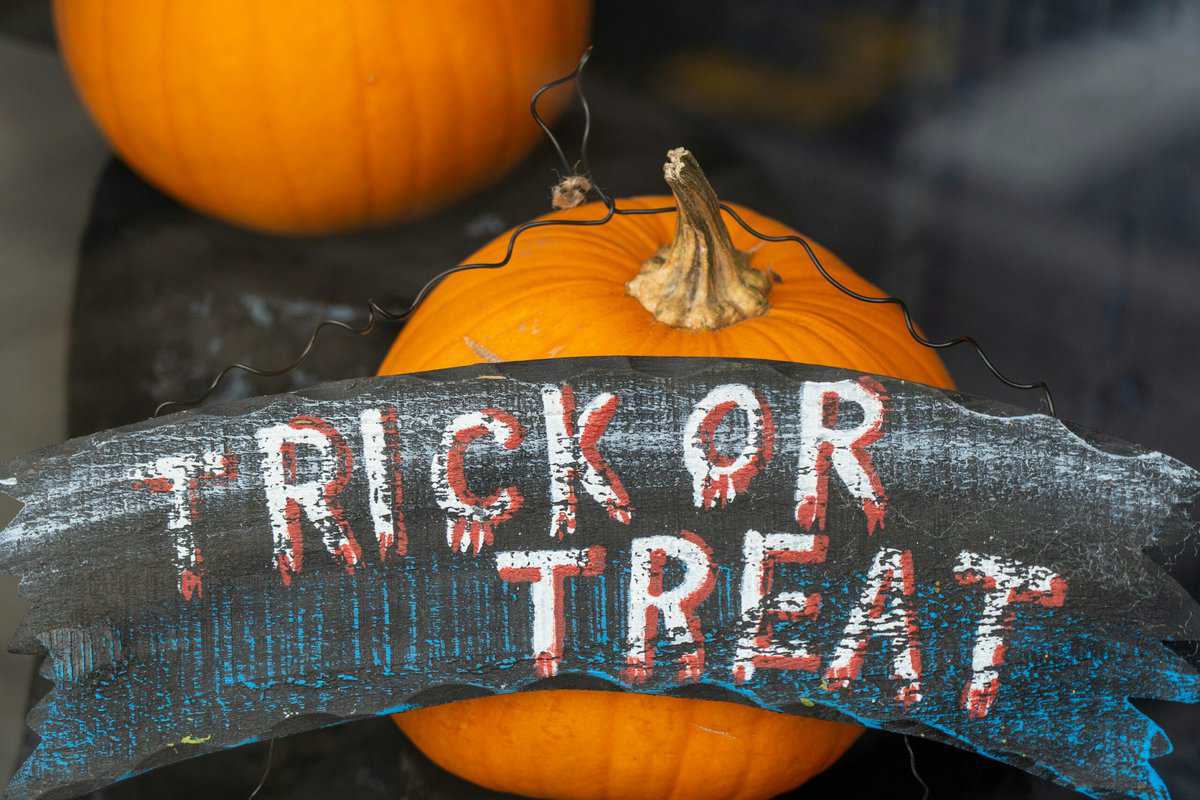
The jack-o’-lantern tradition has roots in Irish folklore about “Stingy Jack,” a character from Christian-era legend, not ancient paganism. The practice of carving turnips or potatoes was adapted when Irish immigrants came to America and found pumpkins more suitable for carving. The familiar orange pumpkin jack-o’-lantern is, in fact, a distinctly American innovation.
Modern Halloween as a candy-focused, child-centered, commercially-driven holiday largely took shape in the 20th century United States. The practice of trick-or-treating as we know it today spread across America primarily in the 1930s and 1940s, encouraged by candy companies and civic organizations as a safe, community-centered activity. The holiday was deliberately transformed from its earlier, sometimes rowdy forms into a family-friendly celebration.
This matters because the Halloween that most people participate in today is primarily cultural and commercial—not ritualistic or religious. The typical family taking their children door to door in superhero costumes is not engaging in anything remotely resembling ancient pagan worship. They’re participating in a secularized cultural tradition that, while it may have distant connections to various historical practices, functions in contemporary society as neighborhood fun, not spiritual ceremony.
Distinguishing Pagan Heritage from Present Christian Practice
One of the most important distinctions in evaluating Halloween is understanding that origin does not automatically determine present meaning. This principle is crucial for Christian cultural engagement more broadly. Even if certain customs had distant pre-Christian roots—and the evidence for this is more ambiguous than often claimed—the relevant question becomes: What do these practices mean now? How do they function in contemporary society? What are people actually doing and why?
C.S. Lewis, one of the most respected Christian thinkers of the 20th century, addressed this principle of intent and heart condition when he wrote: “A man who is eating or lying with his wife or preparing to go to sleep in humility, thankfulness and temperance, is, by Christian standards, in an infinitely higher state than one who is listening to Bach or reading Plato in a state of pride.” His point cuts to the heart of the matter: the spiritual significance of an action depends on the heart and intent behind it, not merely the cultural trappings or historical associations surrounding it.
Applied to Halloween, this means that for most families today, dressing children as cartoon characters is not an act of pagan devotion. Handing out candy to neighbors is not participation in spirit appeasement. Carving faces into pumpkins is not invoking ancient deities. These activities have been emptied of any religious significance they might have once carried and now function as secular cultural practices focused on community, creativity, and fun.
Symbols and practices change meaning dramatically over time. Cultural customs evolve, and their significance is reinterpreted by each generation. If origin alone determined the moral status of a practice, Christians would need to abandon many things, including wedding rings (which have pre-Christian usage in various cultures), the days of the week (most of which are named after Norse gods—Thursday for Thor, Friday for Frigga), certain architectural styles borrowed from pagan temples, and countless other common cultural practices that have pre-Christian origins but no longer carry those associations.
The moral evaluation of a cultural practice depends more on present intent, content, and function than on distant historical ancestry. This is not moral relativism but rather a recognition that human culture is dynamic and that meanings shift across time and context.
Biblical Principles for Christians Evaluating Halloween
The Bible does not mention Halloween specifically, which means Christians must evaluate it using broader biblical principles and wisdom rather than looking for a specific proof text. Several key passages provide helpful frameworks for thinking through cultural participation.
Romans 14 addresses disputes over food and holy days, which were significant controversies in the early church. Paul’s principle is remarkably clear and directly applicable: “One person esteems one day above another; another esteems every day alike. Let each be fully convinced in his own mind. He who observes the day, observes it to the Lord; and he who does not observe the day, to the Lord he does not observe it.” Paul explicitly teaches that Christians have liberty in matters not directly commanded or forbidden by Scripture. Some believers observe certain days; others do not. Each should be fully convinced in their own mind and not judge one another over disputable matters.
Halloween clearly falls into this category of Christian liberty and conscience. It’s not commanded in Scripture, it’s not forbidden in Scripture, and therefore it’s a matter where believers may legitimately differ in their convictions. What matters is that each person acts according to their conscience and doesn’t impose their conviction on others as if it were a biblical command.
In 1 Corinthians 8–10, Paul addresses the question of meat sacrificed to idols, which provides another relevant framework. His reasoning is both theologically profound and practically applicable. First, Paul affirms that “an idol is nothing in the world” and that “there is no other God but one.” The food itself is not spiritually contaminated merely because it was offered to an idol. Second, participation in something becomes wrong primarily when it involves actual idolatry or when it violates one’s own conscience or causes a weaker brother to stumble.
The principle is clear and powerful: participation in something that once had pagan associations, or that exists in a culture with pagan elements, is not automatically sinful—unless one is engaging in the actual worship or spiritual practice itself. Applied carefully to Halloween, this means that participating in cultural customs is not equivalent to participating in paganism, even if some distant historical connection existed.
Paul’s teaching liberates Christians from magical thinking about cultural contamination while still maintaining clear boundaries against actual idolatry. The question is not whether something has any historical connection to paganism, but whether current participation involves actual false worship or violates conscience.
Addressing Fear and Finding Christian Wisdom About the Holiday
Much of the intensity in Halloween debates is fueled by fear-based claims that circulate widely in some Christian communities: “Halloween is Satan’s holiday.” “Demons are especially active on October 31.” “You’re opening spiritual doors by participating.” “Dressing up invites demonic oppression.” These claims, while sincerely believed by some, lack both biblical and historical support.
Christians affirm that Christ is sovereign over all days and seasons. As Colossians 2:16-17 teaches, “Let no one judge you in food or in drink, or regarding a festival or a new moon or sabbaths, which are a shadow of things to come, but the substance is of Christ.” The New Testament consistently portrays believers as secure in Christ—not vulnerable to spiritual contamination through neutral cultural practices. Greater is He who is in believers than he who is in the world.
This doesn’t mean Christians should be naïve about genuine occult practices, which do exist and should be avoided. But we must distinguish between actual occultism and mainstream cultural participation. The typical neighborhood Halloween celebration bears no resemblance to occult ritual. Confusing the two reflects more about our own fears than about spiritual reality.
At the same time, nuance does not mean dismissing all concerns as illegitimate. Some Christians choose not to celebrate Halloween for thoughtful reasons: they’re uncomfortable with horror themes and gore, they want to avoid imagery that glorifies violence or darkness, their conscience is troubled by participation, or they feel it could confuse their Christian witness. These are valid considerations, and Christian liberty includes the freedom to abstain. Those who choose not to participate should be respected, not ridiculed or condemned as legalistic.
The question becomes less about fear and more about wisdom. Can Halloween be engaged thoughtfully? Can Christians participate while maintaining clear boundaries? Can it be an opportunity for hospitality, community connection, and even witness? Many believers answer yes to these questions, while others answer no. Both can be faithful responses depending on conscience, context, and conviction. You can also read on is Christmas a Pagan Holiday
Making a Faithful Decision as a Christian
So what should individual Christians and families do? The answer requires applying biblical wisdom to personal circumstances rather than following a one-size-fits-all rule.
Some Christians choose to engage Halloween as an opportunity for community connection and hospitality. They see it as a rare evening when neighbors naturally interact, providing opportunities for relationship-building and witness. They host or attend community events, hand out candy with genuine warmth, and use the occasion to demonstrate Christian hospitality and joy. For these believers, withdrawing would mean missing a significant cultural moment for engagement.
Other Christians host alternative celebrations—fall festivals, harvest parties, or Reformation Day observances (since October 31 is the anniversary of Martin Luther posting his 95 Theses). These provide community and fun while emphasizing different themes: God’s provision in harvest, the triumph of the Reformation, or light overcoming darkness. These alternatives can be meaningful, though they work best when motivated by positive vision rather than mere fear of Halloween.
Still other Christians simply abstain without fanfare, and this too is a legitimate choice. They may use the evening for family time, prayer, or quiet reflection on the communion of saints. The key is that their abstention flows from conscience rather than fear or judgment of others.
What matters most is not the specific choice but the heart behind it and the way we treat those who choose differently. The biblical emphasis is clear: unity, charity, and maturity matter more than uniform cultural practices. We should neither bind consciences where Scripture doesn’t, nor judge those whose convictions differ from ours.
Conclusion: Moving Beyond Cultural Anxiety
When stripped of sensationalism and fear-mongering, the question of Halloween becomes surprisingly ordinary. It’s not a secret pagan ritual in disguise, nor is it automatically holy. It’s a cultural moment—one among many that Christians navigate with wisdom.
The deeper issue is not October 31 itself, but whether we approach all of life with thoughtful conviction or reactive fear. If participation in Halloween leads to joyful community, clear conscience, faithful witness, and wise boundaries, it can be engaged responsibly. If it troubles your conscience or conflicts with your convictions, abstain freely and without guilt.
Either way, the New Testament calls believers to something greater than cultural anxiety. We’re called to live faithfully in whatever context we inhabit, to love our neighbors genuinely, and to maintain unity with fellow believers even when our convictions differ on disputable matters. Perhaps that perspective—rooted in Scripture, informed by history, and practiced with wisdom—matters more than the pumpkins themselves.